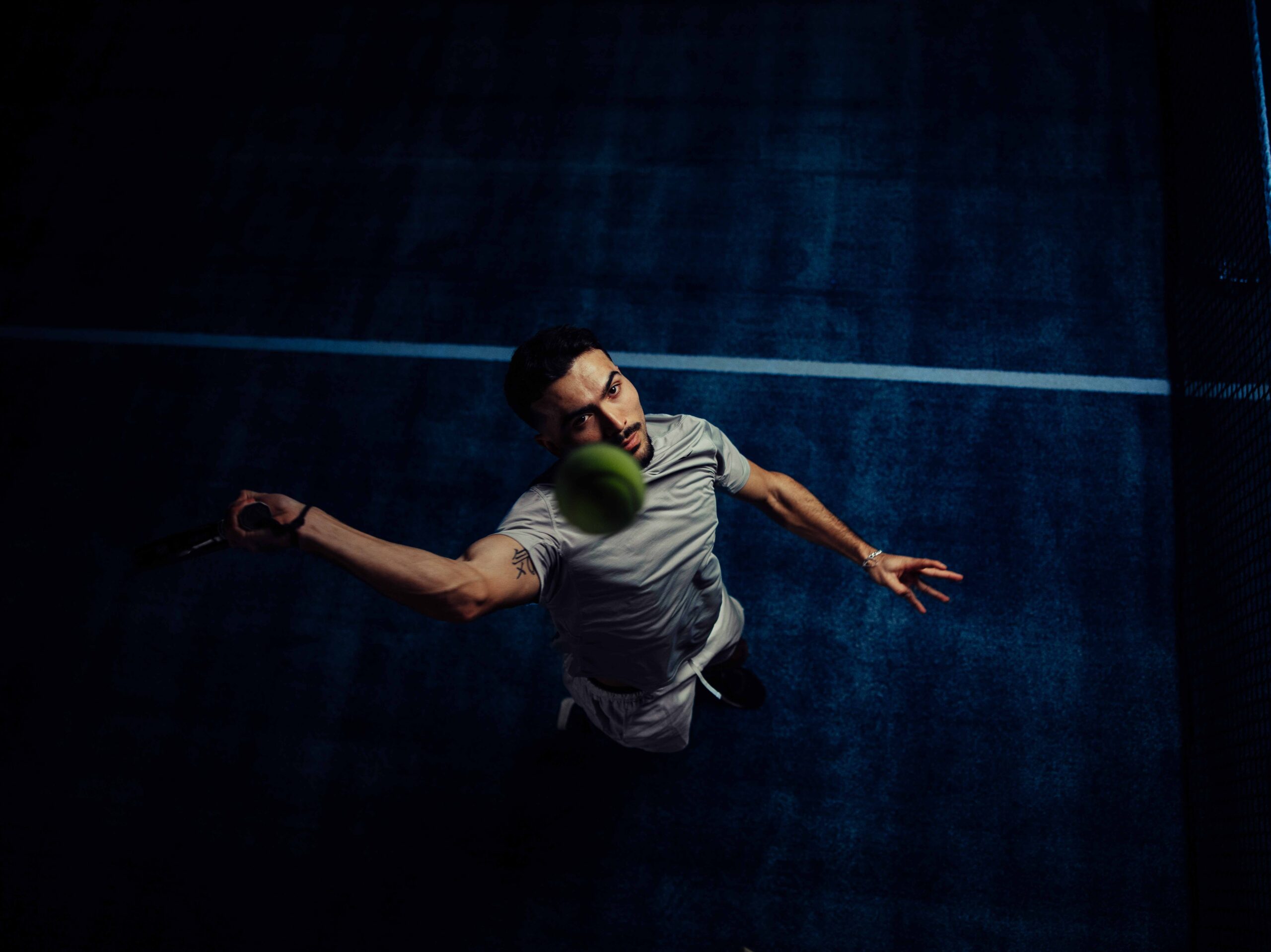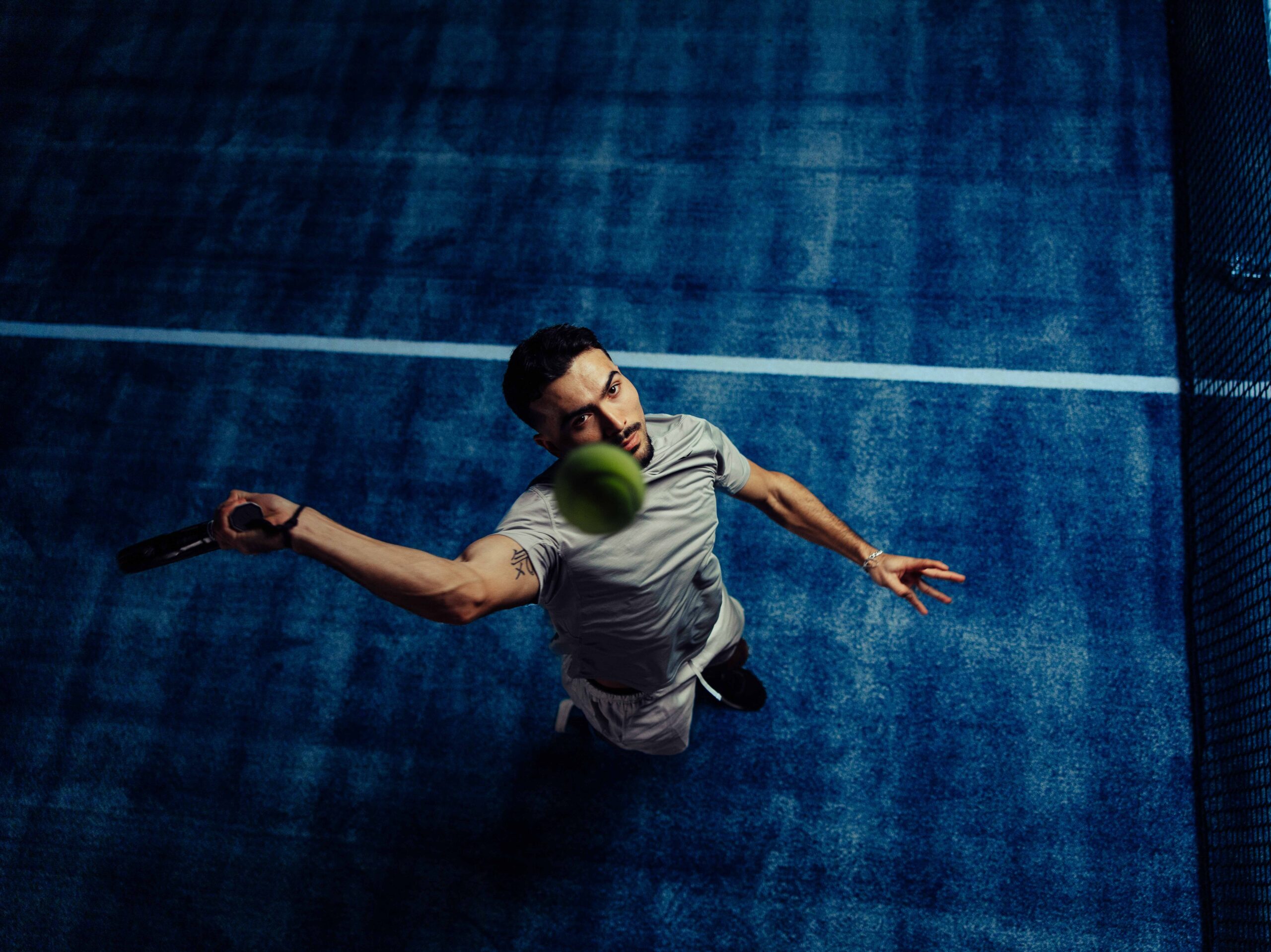
Padel rewards control far more than raw power. The players who win consistently are not the ones who hit hardest; they are the ones who pick the right shot at the right moment and keep the ball in play until the point breaks their way. Learn the core shots below and you will understand most of what is happening on court, whatever your level.
Padel is played in doubles, on an enclosed court with glass walls you can use to your advantage, using tennis-style scoring. Many of these shots exist precisely because of those walls and because the net position decides who controls the rally.
The lob: the most important shot in padel
The lob is a high, deep ball played over your opponents and into the back of their court. It is arguably the most important shot in the game because it does something nothing else can: it turns defence into attack. A good lob forces the players at the net to retreat to the back glass, surrendering the dominant net position to you and your partner.
When to use it: any time you are under pressure, pushed back, or simply want to take the net. Aim deep, ideally over the backhand side.
Beginner tip: prioritise height and depth over disguise. A lob that lands deep but is a little obvious still works; a flat, shallow lob just gets smashed.
The volley: holding the net
The volley is any ball struck before it bounces, played from the net position. Because the team at the net dictates most points, the volley is your tool for keeping that control. It is usually a compact, blocked shot rather than a big swing.
When to use it: whenever you are at the net and the ball comes to you in the air. The goal is placement, often low to your opponents' feet.
Beginner tip: keep the swing short and punch through the ball with a firm wrist. Think of it as a controlled block, not a swing.
The bandeja: the signature defensive overhead
The bandeja (Spanish for "tray") is the most recognisable shot in padel. It is a controlled, sliced overhead played roughly at shoulder-to-head height, used to answer a lob without giving up the net. The motion resembles serving a tray of drinks, hence the name.
When to use it: when you are lobbed but can still reach the ball comfortably above your head and want to stay at the net rather than retreat.
Beginner tip: do not try to win the point with it. Brush across the ball to add slice, aim deep and into a corner, and use it to keep your opponents pinned at the back.
The vibora: the aggressive cousin
The vibora ("viper") is a more aggressive, sharply sliced overhead. Compared with the bandeja it is hit with more pace, more spin, and a snappier wrist action, producing a ball that skids and kicks awkwardly off the side glass.
When to use it: on a slightly shorter or more comfortable lob, when you want to press your advantage and force a weak reply without committing to a full smash.
Beginner tip: master the bandeja first. The vibora is essentially a more attacking version of the same motion, so the slice and contact point carry straight over.
The chiquita: the clever low ball
The chiquita is a slow, low ball played softly at the feet of opponents who are at the net. It is a defensive-to-neutral shot designed to take the sting out of the rally and force a difficult, rising volley.
When to use it: when you are stuck at the back and do not have a clean lob, the chiquita drops at their feet and often forces them to pop the ball up, giving you a chance to attack next.
Beginner tip: aim for low and slow, not hard. The whole point is that it dips below net height by the time it reaches them.
The smash, por tres and por cuatro
The smash is the power overhead, your put-away when you get a short, easy lob. Two famous variations use the back glass. The por tres is a smash angled so the ball bounces and rebounds out over the side fence (off "wall three"). The por cuatro sends it off the back glass with enough power to fly out over the back fence (off "wall four"). Both can be outright winners because the ball leaves the court.
When to use it: only on genuinely short, high lobs where you have time and balance. Forcing a smash from deep usually backfires.
Beginner tip: do not over-hit. A well-placed flat smash into an open space wins far more points than a wild swing aimed at the glass.
Putting it together
You do not need every shot to enjoy padel or to win. Start with the lob and the volley, since they decide who controls the net, then add the bandeja to defend that position. The vibora, chiquita and glass-aided smashes come naturally once the fundamentals are solid. Above all, play the percentages: keep the ball in, take the net when you can, and let your opponents make the errors.